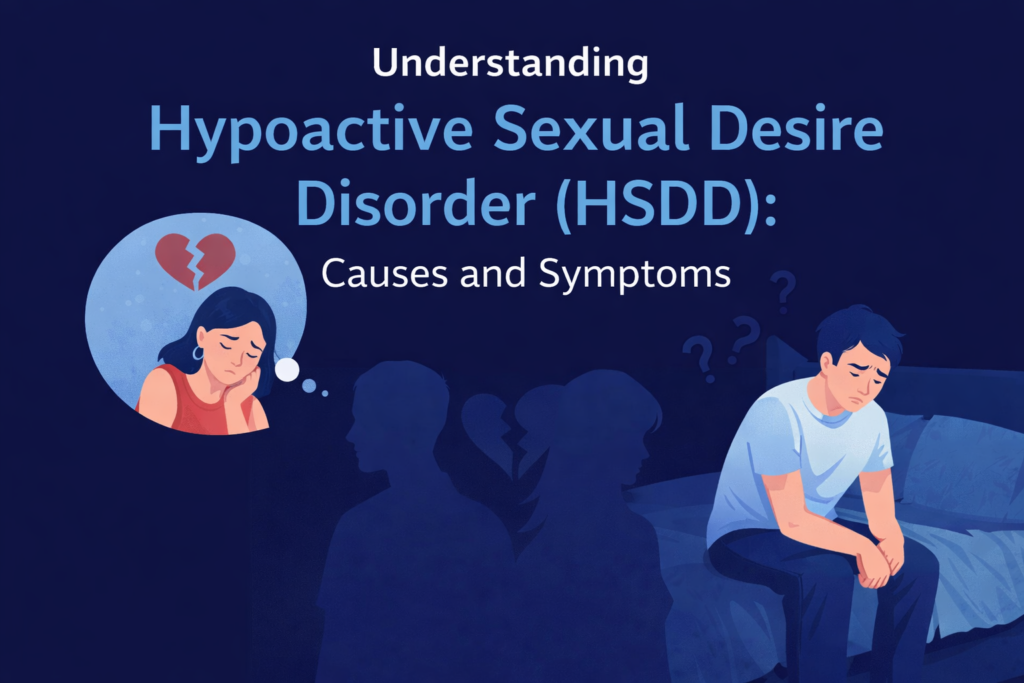
Soni Hospital has spent years working closely with patients across Rajasthan on some of the most personal and difficult health concerns a person can face. Sexual health is one of them. And if there is one thing we have learned over all this time, it is that people wait way too long before asking for help. They convince themselves it is just stress. Or age. Or that they are simply not that kind of person anymore. But then months pass, sometimes years, and nothing changes. If you have been feeling that way, talking to an experienced sexologist in Udaipur might be the conversation that finally gives you some answers. Because what you are going through could very well be Hypoactive Sexual Desire Disorder (HSDD) and the good news is, it is treatable.
We all have phases where we are just not in the mood. A tough month at work, a fight with a partner, not sleeping well these things affect desire and that is completely normal. HSDD is different. It is that long, drawn-out absence of any real interest in intimacy that does not seem to lift no matter what changes around you. And what makes it a medical condition rather than just a phase is that it bothers you. It is affecting your relationship, your confidence, or how you see yourself. That ongoing distress is what separates HSDD from just having a low libido occasionally. You are not overreacting. This is real.
There is no single answer to this. In almost every case we see, HSDD is the result of several things happening together, sometimes over a long period of time. None of them mean something is fundamentally wrong with you as a person.
Hormones Doing Their Own Thing
Testosterone and estrogen are not just reproductive hormones, they are deeply tied to how much interest you have in sex at all. After childbirth, during menopause, or even just as part of getting older, these levels can shift significantly. Men are not exempt from this either. Falling testosterone over time is one of the most underdiagnosed reasons men experience low desire, and most never connect the two.
Stress, anxiety, and depression do not stay in your head; they affect your body and your relationships in very real ways. A lot of our patients are genuinely shocked when they realise their mental health was quietly shutting down their desire for months. Add to that the emotional side of a relationship feeling unheard, distant, or carrying resentment that never got addressed and it becomes a very heavy load for intimacy to survive under.
A Medication You Were Never Warned About
This one catches people off guard. A number of commonly prescribed medications antidepressants especially, but also some blood pressure drugs can suppress libido as a side effect. Patients are rarely told this at the time of prescription. If your interest in intimacy dropped around the same time a new medication was introduced, that timing is worth looking into. A skilled sex specialist in Udaipur will always ask about this and help you figure out whether there is a connection.
Just Being Completely Exhausted
Bad sleep patterns, no exercise, drinking more than usual, grinding through twelve-hour workdays with no real rest the body has limits. When it is surviving rather than thriving, desire tends to be the first casualty. It is not a character flaw. It is your body waving a flag.
The clearest sign of HSDD is simply not thinking about sex or wanting it for a long time, not just occasionally. But the way it actually shows up in daily life is often much quieter than that.
You might start finding reasons to avoid physical closeness not because you have stopped loving your partner, but because even a simple touch can feel loaded with expectation you cannot meet right now. There is often guilt that comes with that, a quiet voice asking why you cannot just be normal about this. Some people find that even when they push themselves to engage, their body stays completely unresponsive and that is a confusing and isolating experience. Over months, all of this builds into a wall between two people who both care about each other but have no idea how to talk about what is happening. If that sounds like your relationship right now, please know there is a way through it.
Treatment for HSDD is not one-size-fits-all and any good doctor will tell you that upfront. Once the cause is properly identified whether it is hormonal, psychological, medication-related, or a combination a clear path forward starts to emerge. That might mean hormone therapy, it might mean individual or couples counseling, it might mean tweaking a prescription. Sometimes all three. The best sexologist in Udaipur is someone who takes time to understand your specific situation before making any recommendations, not someone who hands you a pamphlet and sends you home. For people who feel more at ease talking from home, online sex counselling in Udaipur has become a genuinely popular and effective route. There is something about being in your own space that helps people be more honest.
We are not going to list our credentials and call it a day. What we will tell you is that the people who come to us have often already tried pushing through on their own, and it did not work. What they needed was someone who would actually listen without making them feel embarrassed or judged. That is what we try to be, every single time. Complete privacy, honest conversations, and treatment that is built around your actual life not a textbook version of it. If you are ready to stop guessing and start getting real answers, we are here.
HSDD is not something you just have to live with. It is not proof that your relationship is broken or that something is permanently wrong with you. It is a condition with clear causes and real treatments, and people recover from it all the time. If any part of this article felt uncomfortably familiar, do not just scroll past it. Reach out to Soni Hospital. That one step could genuinely change things.